
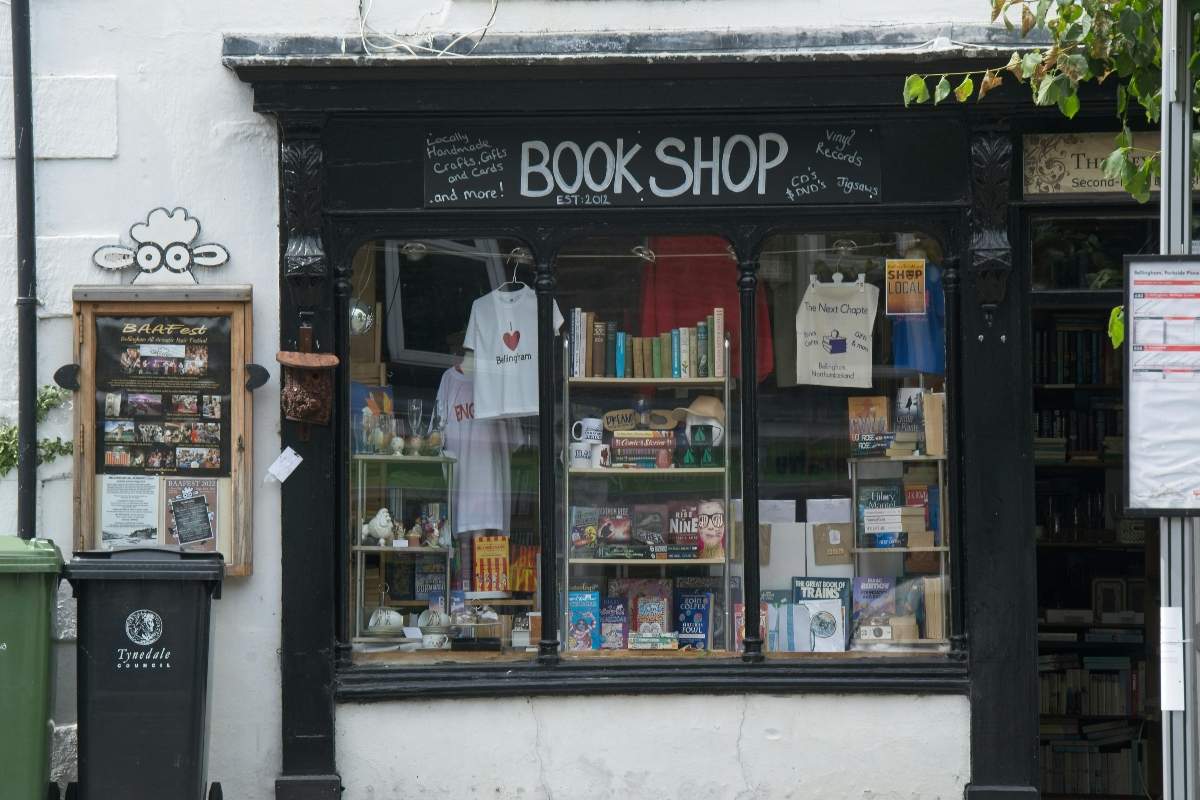
When we think of business in the 2020s, the companies that come to mind are, more often than not, firmly entrenched in the UK’s more prosperous services-based economy: finance, tech, and law are what I usually picture, for example. We probably don’t imagine book shops, milk delivery services, and family-owned businesses.
We think of those sorts of businesses as things of the past; remnants of a bygone era that have scraped by and survived. But the funny thing is, that simply isn’t true. These businesses are actually some of the best examples of modernisation, as they have continued to adapt with the times and enjoyed consistent profits over the years.
So, if you’re curious about how they’ve done it, stick around to find out how.
Examples of Modern Business Adaptations
Local Bookshops
I’m an avid reader and always have been, so I love a bookshop, no matter what for. Whether it’s a Waterstones on a busy high street or an independent store in the middle of the countryside.
It seems that I’m not alone. A decade after the prophets declared that the Kindle would make the humble book extinct, we’re actually seeing a novel renaissance. After the pandemic, book shops reopened their doors to a tidal wave of demand from young readers who flocked over from social media.
For this generation, the book became an aesthetic object and a status symbol, with users on TikTok recording emotional reactions and recommendation videos that drove sales as effectively as the very best marketing campaigns.
On top of this, independent book shops mirrored this online community with a concrete, real community feel in their stores. They’ve become community hubs where they host Q&As with authors, reading clubs, and workshops where customers can learn more about their favourite books.
Of course, many of them also have active online presences, offering users ways to chat with one another in community forums and places to review books, with rating systems built into their platforms. Overall, these strategies have meant that independent bookstores have been able to keep up with online behemoths and high-street titans.
Milk Delivery Services
Over the past few years, the entire milk delivery market has been stealthily reinventing itself. In its current form, the sleeper industry has managed to stay true to its community-focused roots while adapting with a model that allows businesses to thrive in the modern world.
Local milk delivery services are combining tradition with innovation by offering that nostalgic doorstep service in combination with a subscription-based model that lets customers customise orders by product and drop-off time – usually through an easy-to-use app or website.
Now this once old-fashioned service has evolved to become a convenient modern solution that also promotes sustainability, with reused glass bottles and locally sourced milk.
Family-Owned Restaurants
About ten years ago, a trip to a chain restaurant was a bit more exciting. At the time, many of them were trendy, tasty, and reasonably priced. But now? They’re overpriced, quality has taken a nosedive, and most of them can be found in business parks, just between the petrol station and B&M Bargains.
This industrywide shift is one factor that’s set the stage for the comeback of family-owned restaurants, but it isn’t the only thing. Though restaurants aren’t exactly the most financially resilient businesses, the ones that put a lot of money on the plate and are able to offer an authentic experience are reaping the rewards.
That’s because of a little something that I like to call ‘mass production fatigue’. In a world filled with generic, mass-produced clothing, for example, it feels good to wear something more intentional and bespoke.
The same applies to restaurants, where the appeal is in the craft and the experience. In the best family-owned restaurants, customers feel as if they’re swept away on a miniature holiday that can excite their senses and let them forget about the monotony of their hamster wheel existence – all for prices that don’t break the bank.
Despite the passage of time and a recent economic pummeling, lots of traditional businesses are, somehow, still standing. But what’s impressive isn’t their mere survival; it’s how they’ve deftly adjusted their models here and there to slot into the modern world and capitalise on what customers are craving.
If they continue on at this rate, they won’t be joining the dodo anytime soon.