A new study has revealed the UK’s most creative cities, highlighting how cultural clusters are flourishing well beyond the capital and reshaping where Britain’s creative economy grows.
The research, conducted by Co-space, analysed galleries, theatres, museums, art schools, festivals and creative jobs across major cities to produce an overall Creative City Index score.
The findings point to a more distributed national picture of creativity, with coastal and regional centres competing closely with London for talent, opportunity and cultural output.
Top 10 Creative Cities in the UK
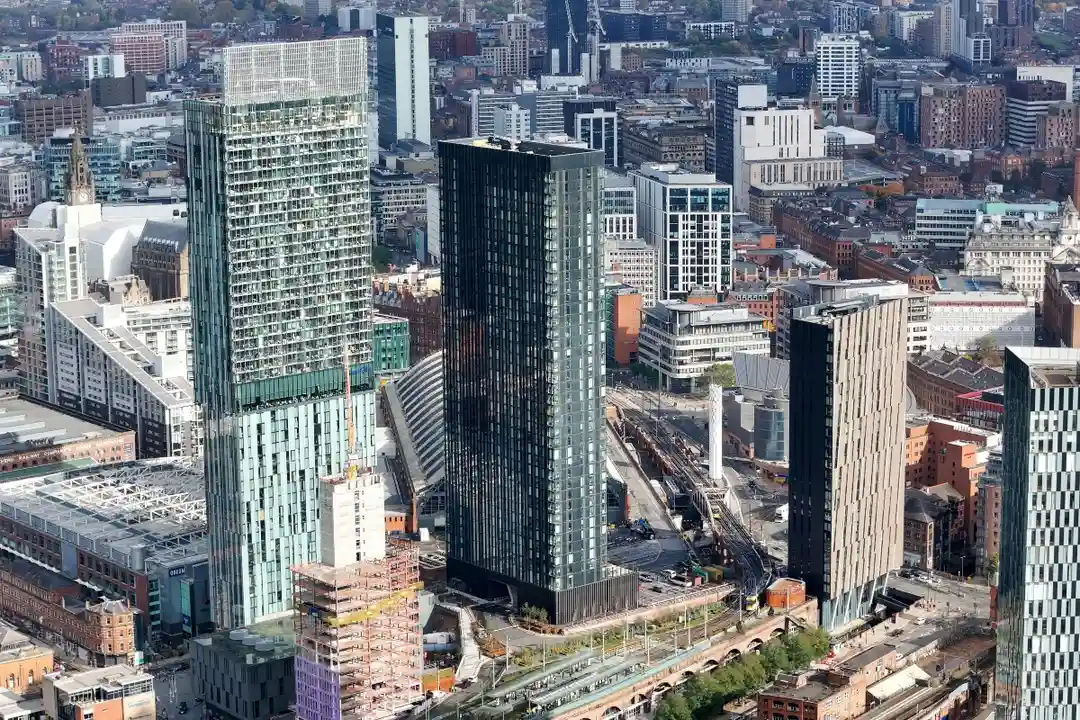
Brighton & Hove has been crowned the UK’s most creative city, outscoring London and every other major cultural hub thanks to its exceptional density of galleries, theatres and museums, according to new rankings.
The south coast city topped the table with a perfect 10/10 score, boasting 26 art galleries per 100,000 people – more than double London’s rate – alongside the highest concentration of theatres and one of the strongest museum provisions nationwide.
Despite its relatively small size, it also hosts more than 1,700 events and festivals, underlining its year-round cultural buzz.
London placed second overall but remains the country’s undisputed heavyweight by scale. The capital accounts for 4,800+ creative jobs and 110 art schools, dwarfing every other city on both measures and reinforcing its status as the UK’s primary creative engine.
However, even with an outstanding score of 9.14 out of 10, the rankings suggest that sheer size no longer guarantees the top spot as smaller cities compete on accessibility, density and community.
Edinburgh ranked third with a solid 7.93 out of 10, driven by its globally recognised festivals and strong per-capita cultural infrastructure, it hosts over six theatres and three museums per 100,000 residents, some of the highest outside the capital.
Manchester secured fourth (5.32), reflecting its fast-growing creative workforce and established strengths in music, media and digital industries. Leicesteremerged as one of the surprise performers in fifth place (4.97), hosting 1,749 events and festivals, more than London or Edinburgh, despite a much smaller population.
Further down the list, Coventry (4.83) and Derby (4.65) punch above their weight with high numbers of art schools, while Belfast (3.99) stands out for museum provision, recording over five museums per 100,000 residents, among the highest rates in the UK.
Why Does Creativity Matter?
The findings point to a shift in where creativity thrives. Rather than being concentrated in one dominant metropolis, creative activity is increasingly spread across regional clusters, where venues, education, jobs and communities exist side by side.
Industry experts say these dense ecosystems make collaboration easier and costs lower, helping freelancers, start-ups and cultural organisations flourish outside London, and reshape the UK’s creative map in the process.
“When creative people and spaces are concentrated together, ideas travel quickly. It’s not just about the number of venues or jobs but how connected they are. Cities that are walkable, affordable and community-driven are increasingly attractive to independent creatives and small businesses.”
William Stokes, CEO of hybrid working hub, Co-space.
Across the top-ranked cities, flexible workspaces are helping freelancers, start-ups and small agencies collaborate under one roof, lowering barriers to entry and turning local networks into thriving innovation communities.
The findings suggest that while London remains as one of the UK’s creative powerhouses, the future of Britain’s cultural and creative economy is increasingly national in character, with regional cities playing a critical role in driving growth, attracting talent and shaping the country’s next wave of ideas.
Methodology:
Co-space wanted to reveal where the most creative cities are in the UK.
To do this, we created an index study combining multiple indicators such as art galleries, theatres, and museums per 100,000 population. As well as the number of art and design schools, creative events and festivals, creative jobs and registered creative businesses and startups per capita.
Each indicator was selected for its relevance to creative vibrancy and economic impact in cities, in line with UK government and EU index standards.
We utilised reputable sources such as ONS, companies house, local government and arts council reports, events and festival listings and city business directories.
All numeric factors (e.g., art galleries per capita) are standardized for city size. Min-max normalisation is used: each indicator is scaled to the range, taking the lowest and highest real-world city values as endpoints.
For each city, the normalised score for all indicators is summed. The total score is then linearly rescaled to an index between 0-10, with the top city assigned a score of 10, and all other scores adjusted proportionally.
Each city was then ranked according to their aggregated score out of 10.
All data was collected and is accurate as of February 2026.
Co-space build work environments for culture, performance and growth.
Get daily news and insights delivered to your inbox
Lucy Turner is a Content Marketing Specialist crafting creative copy for website projects and marketing campaigns. Whether it’s blogging, content optimisation, email and social media content or website messaging, her writing skills translate across all channels.
Just because your business is seeing a growth in revenue, it doesn’t mean your profits are increasing. Revenue isn’t an accurate measure of whether a company is...
Expanding your business can be challenging; investing in new equipment, hiring new staff or creating new products all cost money. Funding can help your business...
From fashion labels to food startups, a new study by Capital on Tap reveals that the UK’s entrepreneurial spirit is stronger than ever. Independent businesses c...
Registering a limited company is an exciting milestone. For many founders and first-time business owners, it marks the moment an idea starts to feel real. But i...
Many people are exploring other opportunities to earn a little extra cash nowadays with a side hustle. One of the new trends in recent years for earning additio...
As we move into the next financial year, Britain’s small and medium-sized enterprises are propelling forward with unexpected momentum. At different ends of the ...