

By Lucy Turner
The M25 Business Corridor: Why It Matters for B2B Marketing
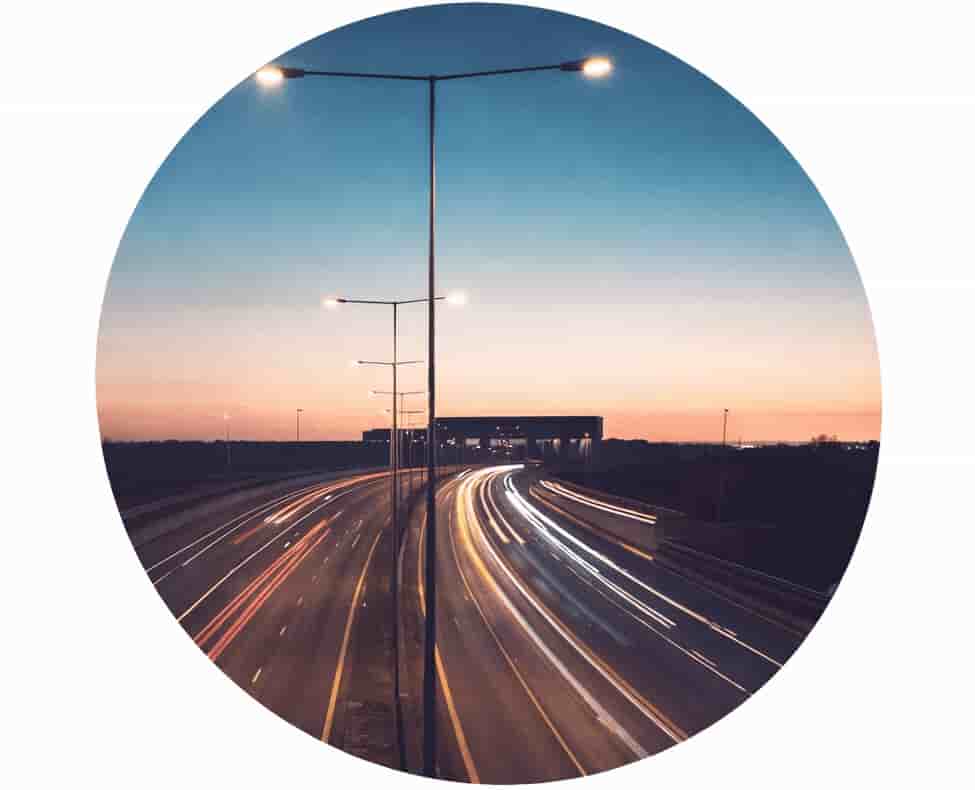
For most people, the M25 is simply the motorway that circles Greater London. For businesses, however, it also forms one of the UK’s most important commercial co...

Brands are putting more money into experiential pop-ups in London and other short-term physical spaces than they have in years. The reason is less about fashion and more about the numbers. Reaching the right people online has become more expensive, while reaching them on the right London street can offer a very different acquisition model.
For brands considering pop-up shops, four things make London particularly interesting:
The important bit is getting the location, audience and measurement right before spending money on the experience itself.
Paid social and search put brands in competition for the same audiences. If several advertisers want to reach the same group, the cost moves with demand, leaving brands with limited control over what they ultimately pay to acquire a customer.
An activation works differently, as rent, build, fit-out, staffing, compliance and de-rig can all be agreed before opening. That gives the brand a largely fixed spend, which can then be divided by the number of new customers acquired.
Not every pop-up will beat paid media on cost. The difference is where the uncertainty sits: online acquisition costs can keep moving, while with a physical activation, the main unknown is how many of the right people you’ll reach and convert.
So what does a customer actually cost through each route? That depends heavily on location. A busy street full of the wrong people can deliver impressive footfall and very few customers. Suddenly, the maths doesn’t look nearly as good.
This is where the choice of partner starts showing up in the numbers. Picking a site isn’t really a judgement about prestige. It’s a judgement about the audience. Backlash works as a pop-up agency in London and assesses locations against the profile of the people who actually pass them. That’s the difference between a projection you can work with, and a hopeful guess based on a famous postcode.
An advert asks someone to imagine a product, whilst an activation lets them experience it. Being able to touch, smell or try something gives customers information a screen cannot provide and makes the product more memorable.
Trial also reduces the risk of a first purchase. Someone who has tested a fragrance on their own skin already knows whether they like it, making that purchase better informed and potentially more likely to lead to a repeat order.
That means loyalty isn’t just about creating a memorable experience, but about helping customers make a more confident first purchase.
The useful question is: does the product gain anything from being handled? Beauty, fragrance, food and drink, fashion and homeware all gain a great deal because the buying decision depends on information a screen can’t fully carry. Texture, scent, taste, fit and feel are difficult to reproduce online.
Low-consideration commodity goods gain much less, and no amount of experience design changes that. Brands in those categories tend to get more from pop-up shops built around demonstration rather than straightforward sampling.
Most cities have a busy centre and a quieter fringe. London is more complicated, and, for the right brand, more useful. Different audiences gather in different parts of the city, sometimes separated by only a few miles of Tube. So when a brand chooses a street, it’s also choosing an audience rather than simply agreeing to a rent.
London’s main retail districts don’t all deliver the same kind of footfall. Each has its own audience and rhythm:
In other words, London has already done some of the audience sorting for you. That means a two-week run can be aimed with reasonable accuracy, provided the location is chosen for the customer rather than the name of the street.
Ten years ago, persuading a central London landlord to grant a four-week tenancy was difficult. Planning rules were reorganised in 2020, and most high street uses now sit within a single use class. That makes switching a unit between uses such as a shop and cafe far less troublesome.
Landlords have also learned that an empty frontage doesn’t do much for a scheme. An active unit brings people and attention back. Agents in London’s main districts now hold stock for short lets, and pop-up shops have become part of how a parade stays active between longer leases. For brands, that opens the door to addresses that would be unrealistic if they required a ten-year commitment.
London has 32 boroughs plus the City of London. That’s 33 licensing authorities, each with its own forms, fees and timings. Temporary retail isn’t unusual to them, so the route is well worn, but that doesn’t mean you can ignore the clock.
Anything on the pavement needs a street trading licence, and Westminster operates its own regime. Serving alcohol requires a Temporary Event Notice lodged in advance, with the police and environmental health given a window to object. Handing out food means registering with the borough at least 28 days before trading.
And permissions attach to a specific address. Change the site late in the process and several of those clocks may start again.
What is a brand actually buying when it hires a venue? Usually, four walls, a set of dates and a power supply. Almost everything else is still outstanding: concept, design, fabrication, installation, hiring and training the team, stock, licensing, data capture, content and finally de-rig.
That’s a lot of moving parts for something that may only be open for a couple of weeks, and delays compound quickly. A late build creates a late install. A late install can mean opening with an unprepared team or an unfinished space. Meanwhile, some of the most expensive footfall of the entire run is already walking past the door.
The brands getting the most from London activations settle the location, audience and measurement before they start thinking about the creative. Choose the district for the customer, start the borough paperwork early and decide what you’ll measure before opening day.
Get those things right, and a temporary shop becomes a measurable acquisition channel, not just another marketing expense. The next step is to talk to people who regularly book and run these streets before choosing the space.
Lucy Turner is a Content Marketing Specialist crafting creative copy for website projects and marketing campaigns. Whether it’s blogging, content optimisation, email and social media content or website messaging, her writing skills translate across all channels.
View all posts by Lucy TurnerBy Lucy Turner
For most people, the M25 is simply the motorway that circles Greater London. For businesses, however, it also forms one of the UK’s most important commercial co...

By Lucy Turner
Search visibility is one of the few marketing channels where a small business can genuinely outrank a much larger competitor. You do not need a big agency retai...

By Lucy Turner
Small businesses often manage marketing internally for longer than planned. A founder writes the emails, someone in sales updates LinkedIn, and website content ...

By Lucy Turner
Posting regularly on Instagram does not give a business much direction if every post starts with the question of what to publish today. Product launches, custom...

By Holly Weller
Public Relations (PR) is the communication between businesses and their customers that influences how a business is interpreted. This practice is considered a m...

By Lucy Turner
For many businesses, Google Ads is one of the first channels they consider when they want to generate more enquiries, leads or sales. It is easy to understand w...
Please add us as a "preferred source" on Google so you can easily find more of the content you value.
Add to Preferred Sources