


By Shane Moore
How Employers Can Support Employees Through Relationship Breakdown
Relationship breakdown is consistently ranked among the most stressful experiences a person can go through. Whether it involves separation, divorce, disputes ov...
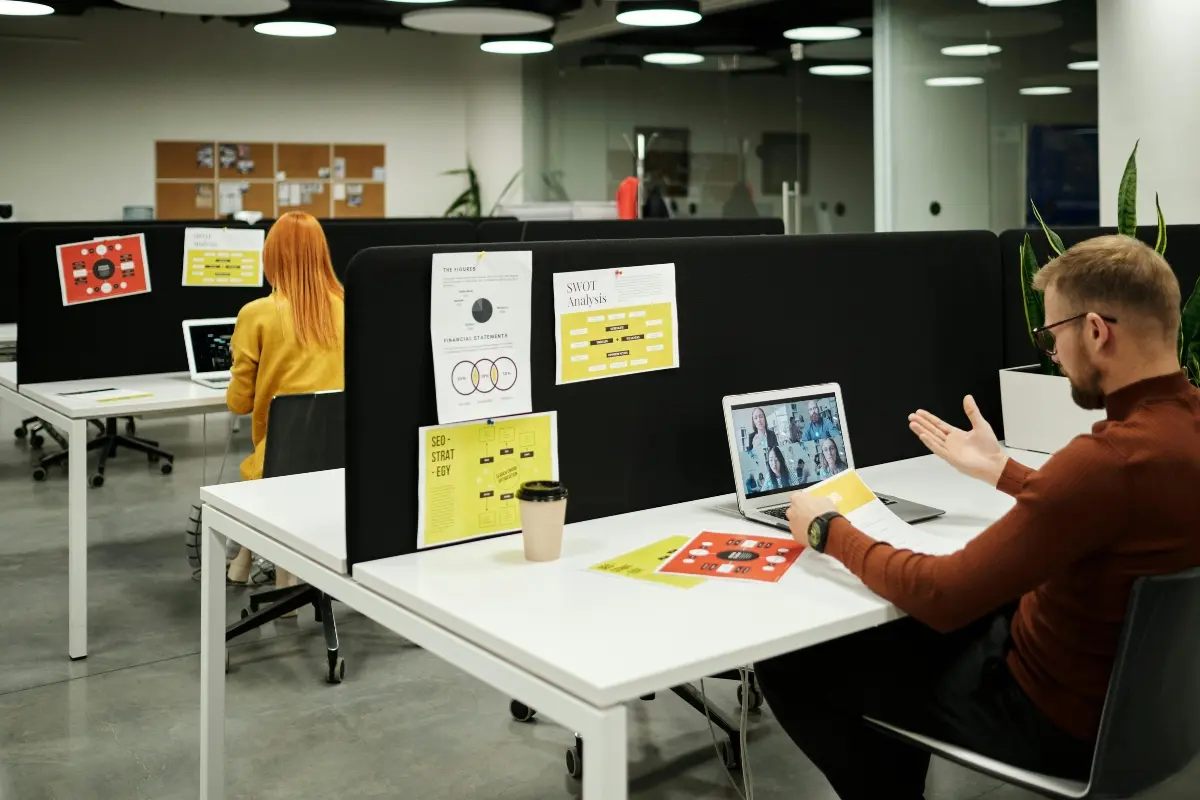
Most business owners focus on the obvious productivity levers: staffing levels, technology, processes, and training. Yet one factor consistently gets overlooked until it becomes a problem: the physical environment in which people work.
Air quality, temperature, and ventilation might sound like facilities management concerns – because they are – but they are also business performance concerns. Poorly managed indoor environments cost companies money through avoidable absenteeism, reduced output, equipment deterioration, and unnecessary energy spend. Understanding this connection is the first step to treating the workplace as a genuine business asset.
When employees work in spaces with poor ventilation or elevated airborne particulates (whether from dust, chemical vapours, or simply inadequate air circulation), the health effects are measurable. Headaches, fatigue, eye irritation, and respiratory discomfort are common symptoms of what is often called “sick building syndrome.”
The business impact is straightforward: when people feel unwell at work, their output drops and their absences rise. Even minor illness-related absences disrupt scheduling. In teams where roles are closely interdependent, one person being off can slow down several others.
For small and medium-sized businesses operating with lean teams, this is not a trivial concern. A few extra sick days per employee per year can translate into thousands of pounds in lost productivity, cover costs, or missed deadlines.
There is a growing body of research linking thermal comfort to cognitive performance. When workplaces are too hot or unevenly heated, error rates increase and decision-making slows. Studies have found that workers in overheated environments are more prone to mistakes on precision or concentration-heavy tasks.
This matters beyond manufacturing or industrial settings. Office workers, customer service teams, and anyone doing detailed work is affected by thermal discomfort. Stable temperature regulation is required for consistent performance.
Businesses that invest in proper temperature control often notice the returns not just in staff morale, but in the quality and accuracy of work produced.
Workplace conditions are an increasingly important factor in how employees evaluate their employer. Workers are more informed about occupational health risks than previous generations, and they factor environmental quality into decisions about whether to stay or leave.
High turnover is expensive. Recruitment, onboarding, and the time it takes for a new hire to reach full productivity all carry costs that rarely show up on a single budget line but compound over time. Businesses with poor working environments face a structural disadvantage: they spend more to maintain the same workforce capacity.
Conversely, businesses that demonstrate genuine investment in safe and comfortable conditions benefit from stronger retention, fewer recruitment cycles, and a reputation that attracts higher-quality candidates.
Ventilation and temperature control systems that are poorly designed or irregularly maintained do not just affect people, they affect energy bills. Over-ventilation wastes heating or cooling capacity. Under-ventilation degrades air quality and forces HVAC systems to work harder, increasing wear and energy consumption simultaneously.
Modern demand-controlled ventilation adjusts airflow based on real occupancy and air quality readings. Sensor-based monitoring tracks carbon dioxide levels and temperature in real time, allowing precise adjustments rather than blanket energy use. Specialist providers such as Zehnder Clean Air Solutions offer engineered systems designed to address exactly these challenges.
For businesses looking to manage operating costs, optimising environmental systems is an area where efficiency gains and wellbeing improvements overlap. It is one of the rare infrastructure investments that simultaneously lowers costs and improves conditions.
The most forward-thinking businesses do not treat the workplace environment as a compliance checkbox. They treat it as an operational variable: something that can be actively managed to influence output, morale, and long-term costs.
This shift in thinking does not require major capital expenditure upfront. It starts with an honest audit of current conditions: Are there areas where temperature fluctuates significantly? Are staff reporting fatigue or headaches mid-shift? Is equipment being maintained more frequently than expected? These questions often point to environmental factors before they point to process or personnel issues.
Small, targeted improvements (better air circulation in a specific area, more responsive temperature controls, or improved filtration in a workspace that generates dust) frequently deliver returns that outweigh their cost within a single financial year.
Business owners do not need to overhaul their premises overnight. A practical approach involves three steps:
Walk the workspace with fresh eyes, or ask employees directly about discomfort. Patterns in feedback often reveal problem areas quickly.
Focus initial investment on the areas where people spend the most time or where precision work is carried out. The return on improving conditions in high-occupancy or high-output zones will be greatest.
Monitor absenteeism rates, energy consumption, and maintenance frequency before and after any changes. Quantifying the return makes future investment decisions easier to justify.
Workplace environment is not a soft benefit or a wellbeing gesture. It is a performance variable with direct financial consequences. Businesses that manage it strategically rather than reactively gain an advantage in workforce reliability, operational efficiency, and cost control.
Clean air and stable temperatures are not luxuries reserved for premium office spaces. They are conditions that enable people to do their best work, day after day. For any business serious about sustainable productivity, the environment people work in deserves the same strategic attention as any other operational input.
Shane Moore has not provided a bio yet.
View all posts by Shane MooreBy Shane Moore
Relationship breakdown is consistently ranked among the most stressful experiences a person can go through. Whether it involves separation, divorce, disputes ov...

By Lucy Turner
Workplace socials have long been a defining part of company culture. From after-work drinks to team-building days, they’re designed to help teams unwind and con...

By Lucy Turner
More than a quarter of working Brits feel least productive in January, with an estimated two million people affected by low mood and reduced motivation as dayli...

By Lucy Turner
We’re all familiar with the concepts of fight, flight or freeze, which are well-known human reactions to a potential threat or danger. But there is a fourth typ...

By Lucy Turner
New research reveals that older workers are suffering from a silent mental health crisis at work, with almost a third (32%) of workers over 55 having taken time...

By Lucy Turner
A new study has revealed the impact different industries have on the health and wellbeing of those working in them, highlighting the best and worst careers for ...
Please add us as a "preferred source" on Google so you can easily find more of the content you value.
Add to Preferred Sources